
By Pat McCaughan
Since its inception in 2013, Seeds of Hope, the food justice ministry of the Diocese of Los Angeles, has grown from a small county grant focused on garden-based nutrition education into an independent 501c3 public health nonprofit agency, Executive Director Steve Trapasso said in a Nov. 14 address to the 131st convention of the diocese meeting in Riverside.
“Across our distribution network, we now share more than 125,000 pounds of food every single week,” he said. That includes families bringing home fresh produce, volunteers picking up food for their neighbors, and community organizations reaching people they could never reach alone.”
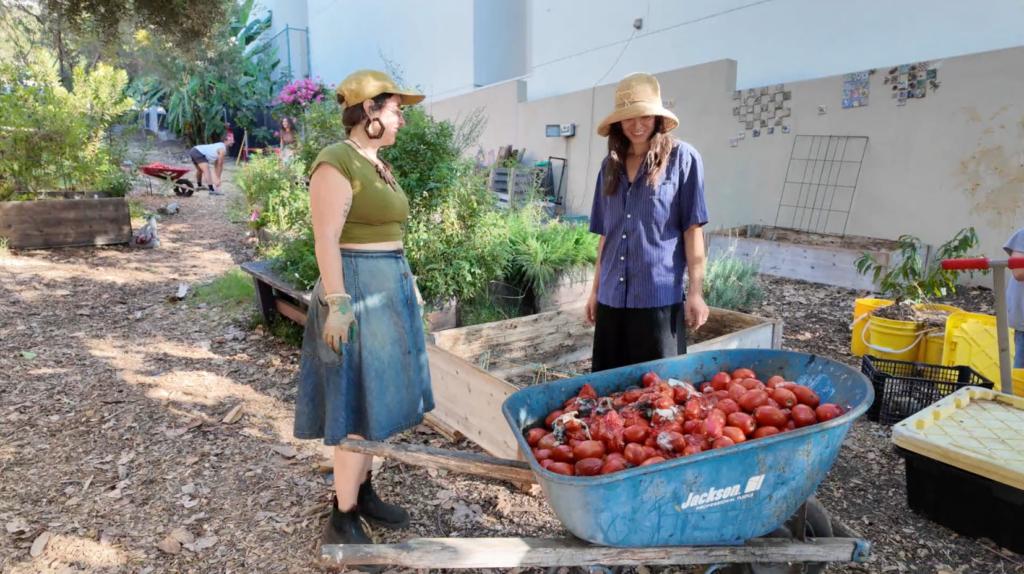
The ministry began with the idea of growing food on unused church land and now encompasses produce recovery and redistribution, medically supportive food, horticultural therapy, nutrition and cooking classes and community health worker services, and includes partnerships with Kaiser Permanente, Cal Poly Pomona, the National Institute of Health, the Rand Corporation, Americorps, churches and many other communities.
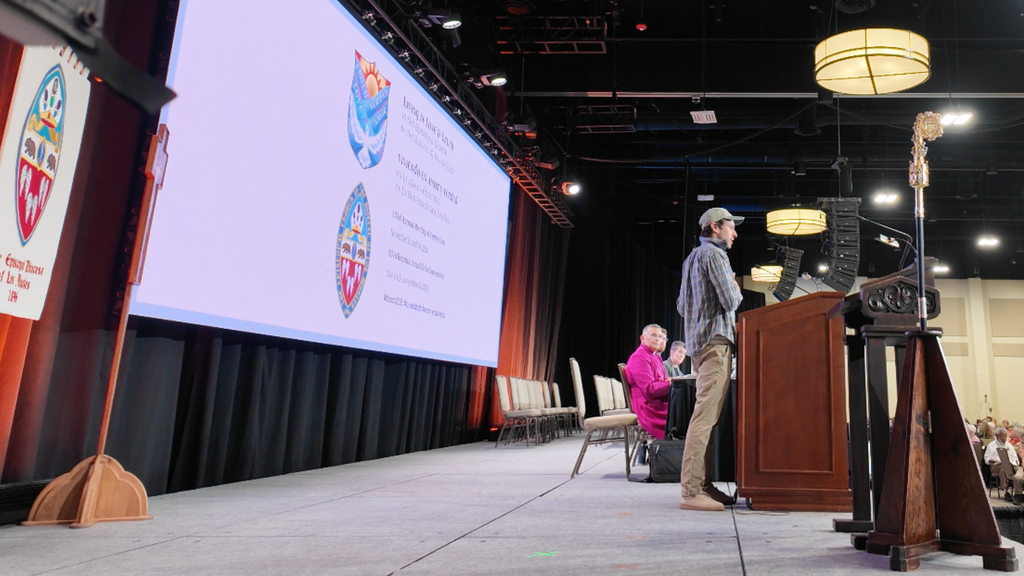
The goal is to help make “the healthy choice the easy choice in the communities we serve” including Los Angeles and Orange counties, Trapasso said. “Knowing what to eat is only one part of being healthy. People also need access to affordable, nourishing food, nutrient-dense food, and they need somewhere to prepare it, support in managing their health, and people they can turn to when life gets difficult. Our work grew in response to those needs.”
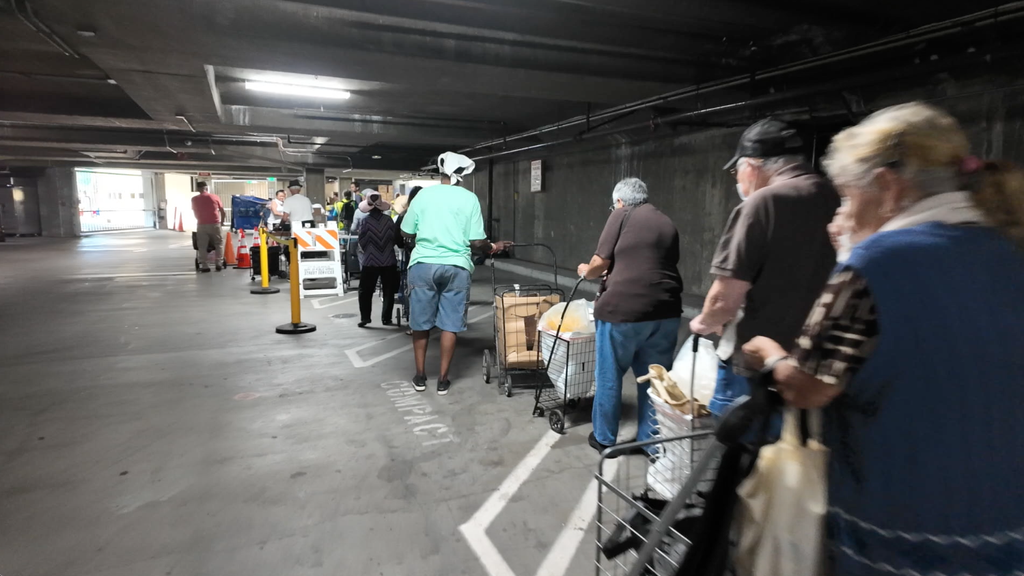
Seeds of Hope, which has reported annual food distributions reaching more than 180,000 households, or over 8 million servings of 1.6 million pounds of produce annually across 64 locations in southern California, also recently announced a new distribution point serving the Crenshaw and Leimert Park neighborhoods, in association with Food Forward Inc. and the Farmlink Project.
“The Crenshaw community produce point brings fresh food closer and helps our partners go further. By cutting transportation time and costs, it frees agencies to put more energy into their programs and more produce into the hands of families,” Trapasso said, in making the announcement.
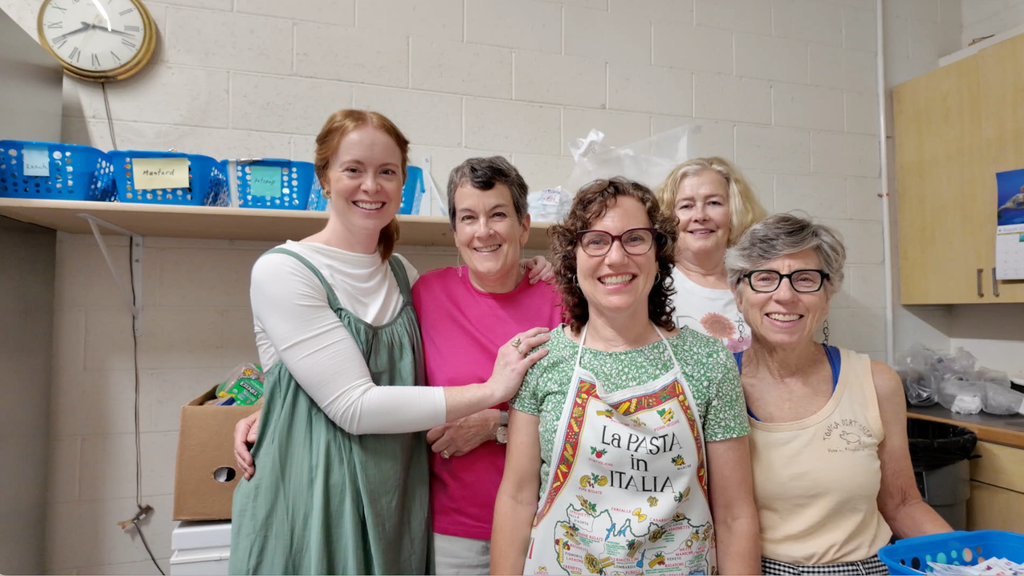
Trapasso thanked local church communities “who opened their parish halls, who trusted us and the belief that something as ordinary as sharing food could become something transformative. Over the years, you’ve invited us into your gardens, into your parish halls, your pantries, and your neighborhoods. You’ve given us a space to grow food, to teach a class, to share a meal and build relationships. Thank you for allowing us to serve alongside you.”
He also Bishops Antonio José Gallardo Lucena, and John Harvey Taylor and former executive director Tim Alderson, because “without their leadership, Seeds of Hope would not be what it is today.” He paid special tribute to former Bishop J. Jon Bruno, who “had this vision when he was sick at City of Hope Hospital” of growing food on unused church properties. “From that experience, came the name Seeds of Hope, and we look forward to continuing that relationship as we enter a new chapter.”
The agency provides case management support, weekly food deliveries and nutrition education for patients referred from healthcare organizations. Its gardens, in addition to providing nutritious food, also offer space for horticultural therapy. “A garden gives people something to care for and a place to belong,” he said. “Sometimes, the most meaningful thing growing in a garden is the relationship to the people they’re growing alongside.”
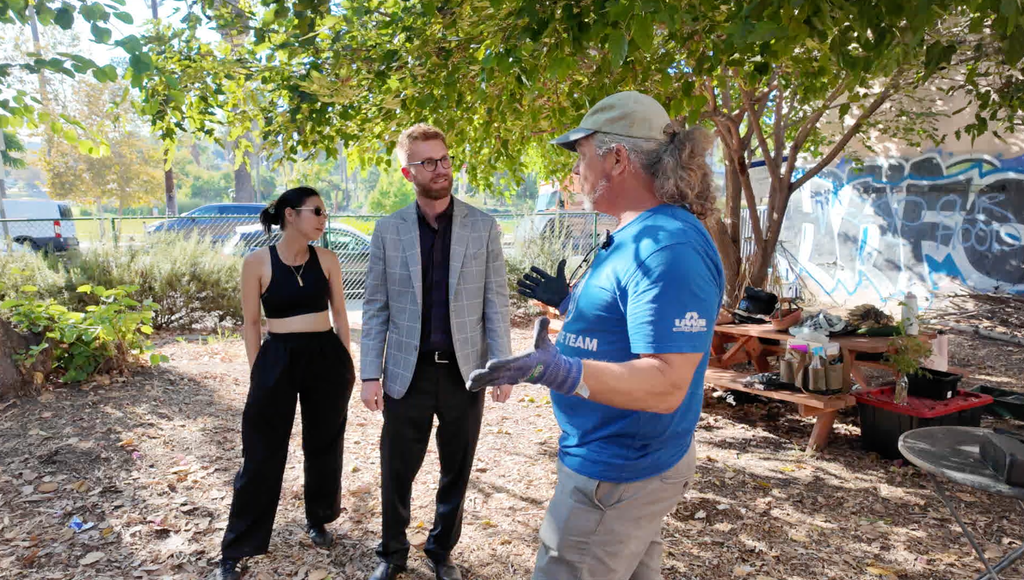
Even its Edendale Grove Community Compost Garden has had beneficial effects, “rot squad” members Eric Newton and Cassandra Marketos said, in a video presentation. “Slowly making the compost garden grow food has become a real balm,” Marketos said. “It’s life changing; it’s really changed our perspectives on what it means to steward the earth, to be good citizens, to care for each other.”
Trapasso said he is excited about several upcoming projects, including:
- a 3-year partnership through Kaiser Permanente, to provide produce prescriptions or medically supportive foods by referrals to South Central Family Health Center and Northeast Valley Health Corporation patients;
- a National Institute of Health-funded 5-year intervention in collaboration with the Rand Corporation and 14 South Los Angeles churches, to include: sermons focused on healthy eating and nutrition promotion; aiding neighborhood corner stores in offering healthier choices;
- a San Gabriel Valley Hospital Collaborative offering a free farmers market, nutrition promotion, and produce prescriptions to seven federally qualified health centers; and
- with the L.A. County Department of Public Health, working alongside the Venice Family Clinic, UCLA Northeast Valley Health Corporation, and Asian Pacific Healthcare Venture, to deliver food to expectant mothers, from 10-to-16-weeks’ gestation through six-months post-partum.
“We want mothers, including those who are nursing, to have access to the nourishment they need while caring for their children, their babies and themselves,” he said.
Seeds of Hope Project and Program Manager Adriana Arce said, in a video presentation to convention, that the best part of serving about 300 people on Fridays at the St. Paul’s Commons Food Pantry in Echo Park is “getting to know all the different people from the community and hearing their stories. We’ve really built their trust.” QueensCare Health Services community health care workers are available twice monthly to provide offer blood pressure and blood sugar screening and other access to healthcare services. A mental health professional also is available once a month to assist those in need.
“Each of these partnerships builds on something this diocese helped establish, a ministry rooted in hospitality, sustained by relationships, and willing to respond when a neighbor needs help,” Trapasso said.
“None of this would be possible without the diocesan staff and community who are supporters through the years and this transition,” Trapasso said. “We became a 501c3 in June 2026. We have a newly formed board, bringing together leaders from public health, farming, and the nonprofit community. I’m happy to report that about half the board are God-fearing Episcopalians, so we are keeping our roots well-represented.
“As we begin this next chapter, we carry our Episcopal roots with us and our baptismal covenant that calls on this community to respect the dignity of every human being,” he said. “That commitment has shaped Jesus’s hope from the beginning, and will continue to guide how we welcome people, listen to them, and serve alongside them.
“Our new structure gives us opportunities to reach more people, build new partnerships, raise money that we wouldn’t otherwise be able to do as a religious institution. The work ahead will continue to depend on the same generosity and willingness that helped us begin this journey. Thank you for planting with us, serving with us, and believing in this ministry.”