by Pat McCaughan
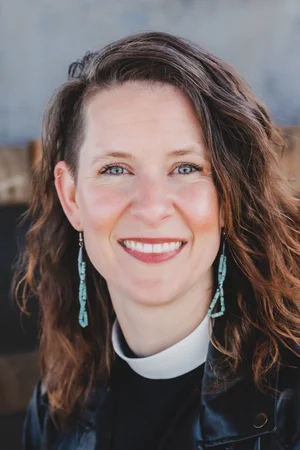
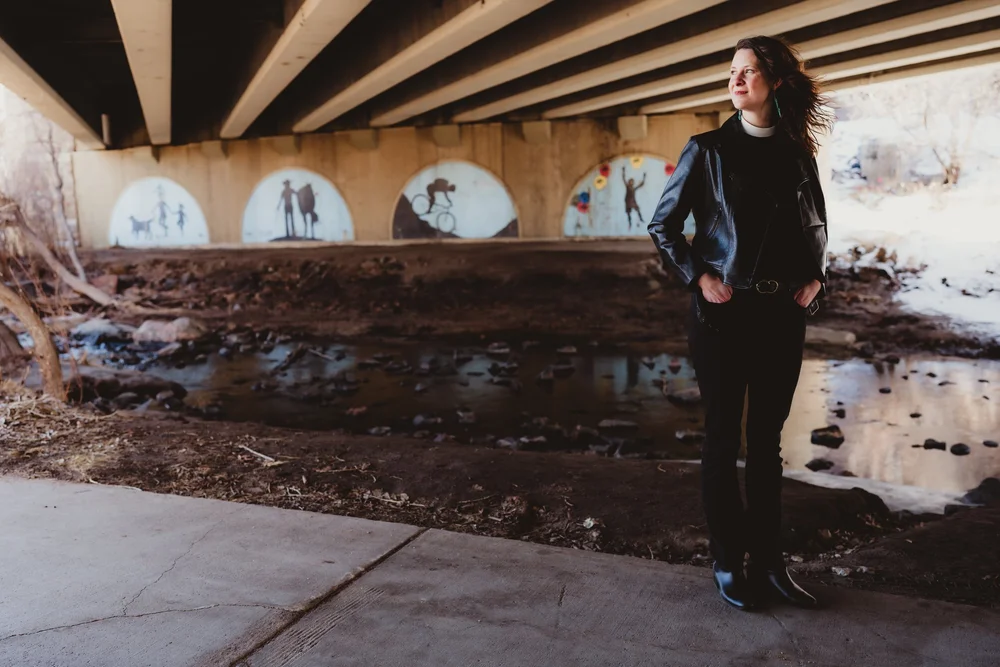
The Rev. Lauren Grubaugh Thomas began the Holy Companion Episcopal community in Sterling, Colorado, by organizing a block party.
That was three years ago and Thomas, who hails from the Los Angeles diocese, was a new mom, new to the Denver suburb and yearning for community and belonging. So were many of her neighbors, she discovered, after reaching out. More gatherings followed, in parks, living rooms and backyards.
Now, the self-described “writer, priest, mother, gatherer of dissident communities” and co-host of “A Soulful Revolution” podcast, serves as vicar of an intergenerational congregation that meets biweekly for Eucharist in a local clubhouse, and for Evening Prayer in homes.
“Our services look like beautiful chaos. We’ve drawn a lot of people that, in our county context, historically have not been welcomed” including local Latino and Muslim communities, she told The Episcopal News in a recent telephone interview.
“As we got to know our neighbors more and people learned I was a priest, we began having conversations. People were intrigued about a more loving, inclusive theology than what they were raised with. Many were post-religious but potentially interested in dipping their toes in, but with a lot of trepidation.”
Thomas, 35, will serve as guest preacher and workshop leader at the 131st annual meeting of the L.A. diocese Nov. 13-14 in Riverside, at the invitation of Bishop Antonio José Gallardo Lucena, with whom she worked previously at All Saints Church in Pasadena.
“A big part of my heart is in L.A. I love it and miss it,” Thomas said. “I’m looking forward to bringing what love in action looks like.”
Holy Companion derives its name from the gospel of Luke’s post-resurrection account of Jesus’s encounter on the road to Emmaus. “It’s a journey marked by questions spoken, disappointments articulated, hopes expressed, and faith renewed. In the middle is a meal, with a recognition of God’s presence that was there all along. And it ends, as it started, with another journey,” according to the congregation’s website.
“We see ourselves as companions on the journey of faith which frees all of us to trust that it’s Christ who companions each of us on the way,” Thomas said. “Within our very transient context … for however long people are with us, we get the privilege of companioning them with holy curiosity, joy and solidarity in places of suffering.”
She added: “We talk a lot about holy curiosity. We talk about each other, the fact that unity looks like, not conformity, not uniformity but the safety that we build when we show holy curiosity toward each other and learn with awe.”
The workshop she will offer is called “Peace be with You: Building Solidarity Beyond Church Walls” and will draw from her church planting experiences and congregation’s interfaith ministry. She has also chronicled her ministry in a book, “Becoming Soulful Revolutionaries: Essential Spiritual Practices for Life Beyond Tyranny,” to be released by Broadleaf Books in January 2028.
“Social change is a spiritual practice and if we want to make the world a better place, we have to be deeply rooted in Spirit,” she said. “The idea is that the way we approach change when the world is on fire, is as much about the internal work we’re doing to be transformed by the renewing of our minds, as St. Paul says. I’ve met so many burned out activists and so many people of faith who are overwhelmed and don’t know where to begin. The book is a love letter to both of those communities.”
Thomas is the mother of 5-year-old twins, Harper and Sophia, and is married to Kurian, an aerospace engineer. A graduate of UCLA with a degree in Spanish, and of Fuller Seminary, she has also served congregations in the Diocese of Indianapolis and Colorado. While in L.A., she was involved at Homeboy Industries, and L.A. Voice, and “that was my introduction to community organizing,” she said.
She expresses “deep gratitude to Bishop Antonio for the invitation” to preach at diocesan convention. “I intend to draw upon my own experiences in moments where those voices that often get pushed to the side and unheard and even disposed of, are the ones that are placed at the center, and how we are transformed by that act of solidarity and that part of the Body of Christ that has been considered less important,” she said.
“The work of unity is about how we create places of rigorous belonging that are rooted in solidarity, rooted in regard for whom Christ called the least of these, who have been called out and dismissed … and standing in awe of the incredible gifts these communities have to offer that our society doesn’t treat with the same dignity and respect that we are called to as Christians.”
“It’s a homecoming for me in the best way,” Thomas added. “I could not have imagined this opportunity, an incredible privilege and honor and joy and I look forward to learning from the Diocese of L.A. and to bring those learnings and energy and spirit back to my own congregation and diocese.”