by Pat McCaughan
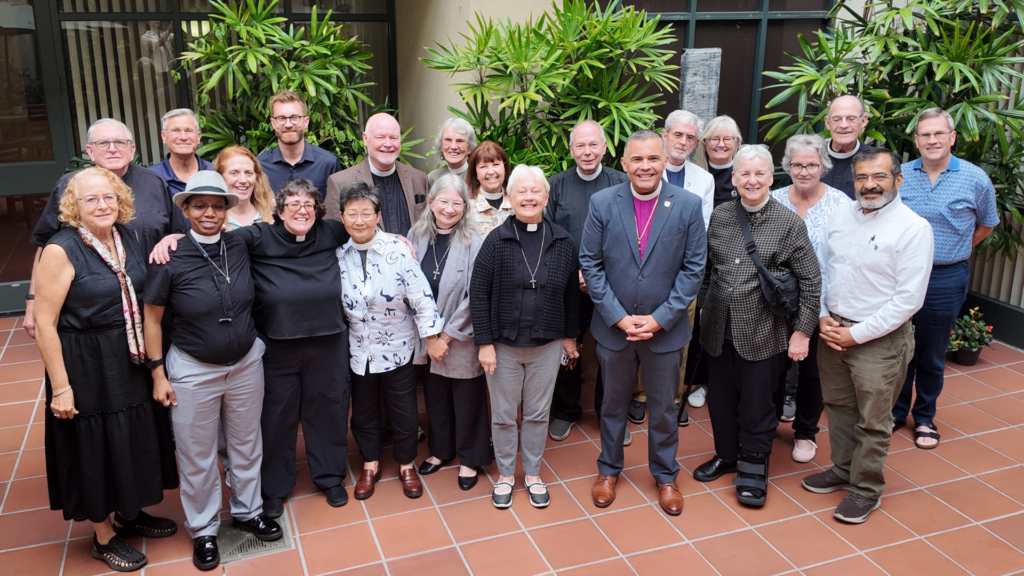
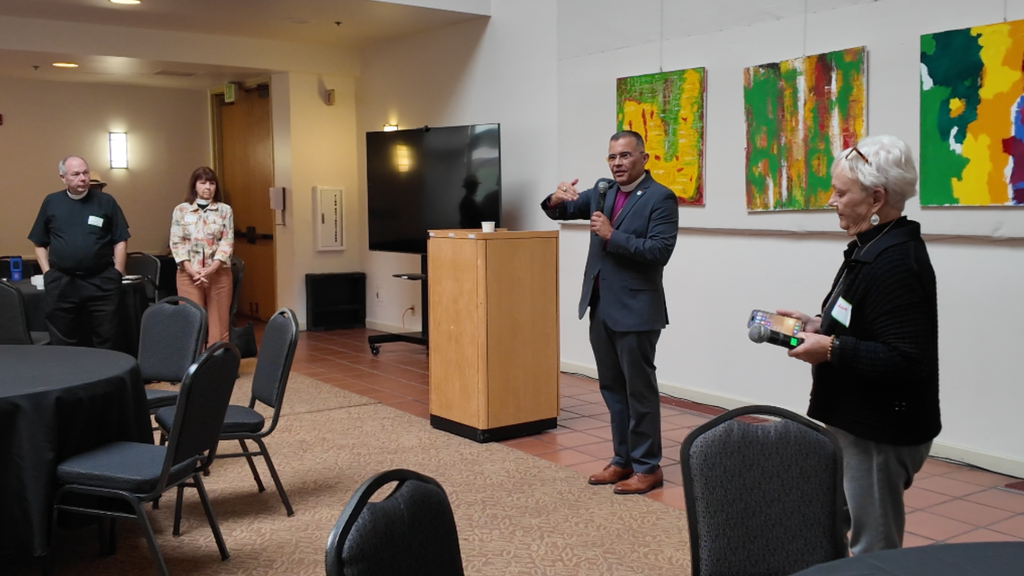
Deacons in active ministry in the Los Angeles diocese are a small but mighty group, they told Bishop Antonio José Gallardo Lucena at an Oct. 17 “Deacon Day” gathering at St. Paul’s Commons.
“Deacon Day was a reminder for me of the breadth and depth of diaconal ministry, from support and advocacy for refugees and immigrants to environmental justice, care for those who are at the end of their lives, patients and hospital staff, feeding people, campus ministry, and engaging their neighbors,” said Archdeacon Laura Siriani.
“Deacons also invite folks in their parish to join them in their ministry,” she added. “That is our call and the vow we take at ordination. It’s playing out very well in the Diocese of Los Angeles!”
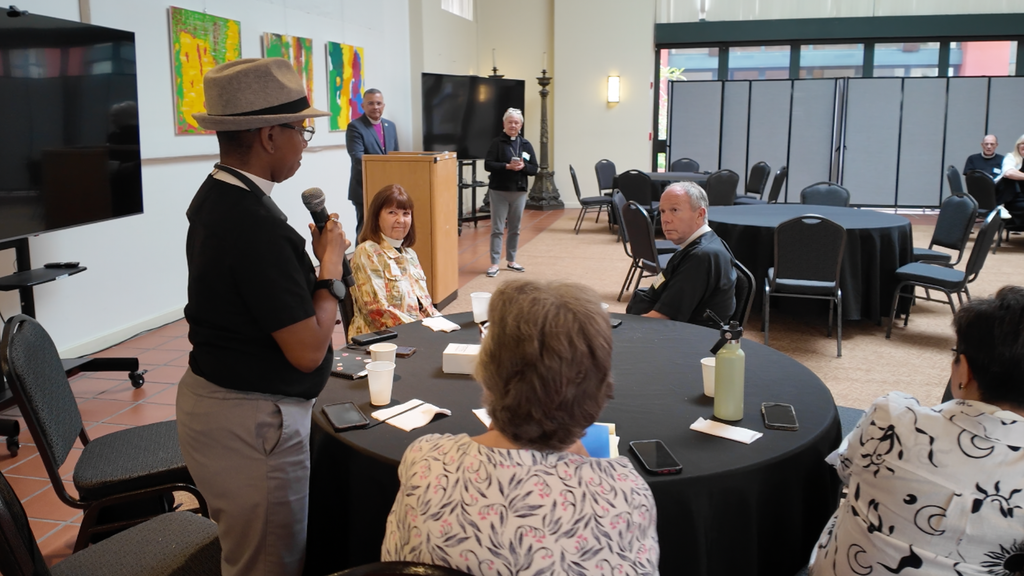
Gallardo agreed. “You stepped in, you responded to a call and then realized how awesome your life is because you did,” he told about 40 deacons and postulants who are discerning a call to the vocational diaconate. “Thank you. You do it because God called you. You do it because you want to serve God and God’s people. You are one of those ministries that I think people don’t know enough about, or about what you do.”
The diocese has about 37 deacons, who serve about a third of congregations while also serving in active ministries outside the church. “Deacons are vital in every congregation. I wish that every church could have a deacon,” Gallardo told the gathering. “We will have to figure that one out.”
The need for excellent culturally and linguistically accessible vocational and theological formation for deacons, “is a big conversation” currently across The Episcopal Church, Gallardo said, in response to a question about training additional deacons for ministry. Churchwide, there are about 3,000 deacons, according to the website of the Association for Episcopal Deacons, which means some of the church’s 110 dioceses have only a handful, if any, deacons in active ministry.
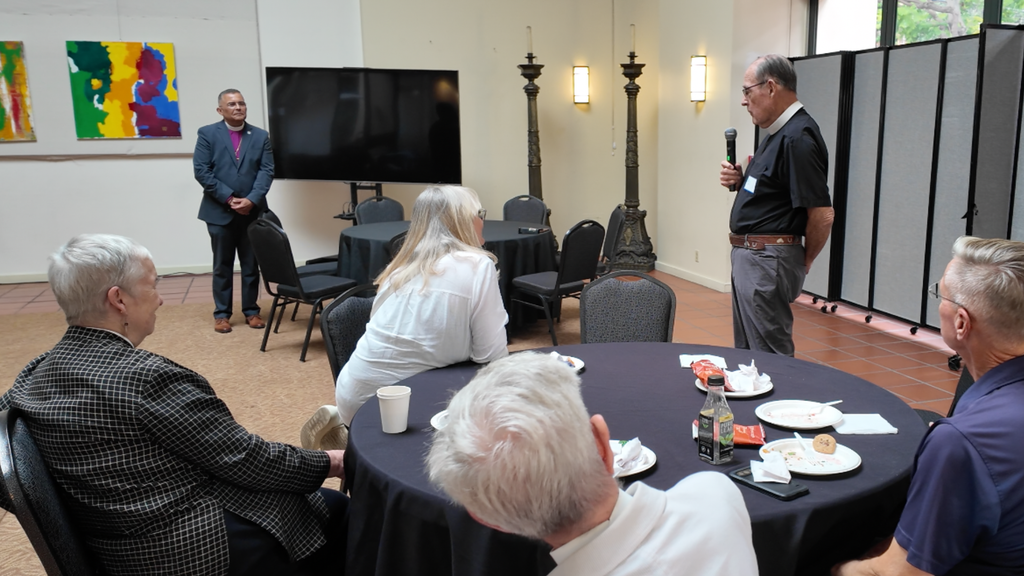
The Los Angeles diocese participates in the Deacons Formation Collaborative, an online program in partnership with Bexley Seabury Seminary. But other options are being investigated and considered, he said, including among bishops in Province VIII, the western region of the United States, as well as the dioceses of Navajoland, Taiwan, and the Convocation of Churches in Europe/Micronesia.
But, he added: “I realized within these first three months, that we need to ask God to open our hearts, to embrace other ways of doing church,” Gallardo said. “Because, in many cases we’re still thinking the way we were 50 years ago.”
Gallardo had invited deacons and postulants “as an opportunity to get to know one another better as we start doing this work together.” He is considering structurally creating a role for a second archdeacon and discussed such “tensions” as clergy shortages, the uneven distribution of resources and support for some outlying congregations and communities of color. He also extended an invitation to join him during official visitations to congregations.
The uneven distribution of resources, particularly in smaller, outlying areas and communities of color, “is heartbreaking. It really makes me want to cry, every time I think about it,” he said.
“That is sad for the Body of Christ. You have probably heard the past five years, that we have a shortage of clergy. That invites us to figure out what’s happening, because the number has not increased. The sad part for me is that we have 40 places, plus more, without priests, where bishop’s committees and deacons have assumed a responsibility … to be pastors, to run finances and audits, how to handle difficult people, and we have had to step in to help. We don’t have the resources to step in and support the way we should. “
He said he has asked, at each of his get-acquainted with diocesan deanery celebrations, “how is God at work at your place? And everybody says at least one thing. That to me, means resiliency, especially for those places with no resources and no priest and no permanent support. It also says God is working in other ways.
The good news is that “independently of size, independently of average Sunday attendance, independently of having full-time clergy and fewer resources, people are doing good work, are doing God’s work, so it’s a tension that exists, that we have to build upon.”
“I want to work for them. I want to see whatever we can do to support those ministries in whatever shape they are.”
The Rev. Deacon Linda Pederson shared that St. John’s in San Bernardino is known “as the neighborhood church—even if the neighborhood doesn’t come to church on Sundays.” The church has hosted a food bank, a free health clinic, afterschool tutoring, and housed asylum-seekers and those released from detention centers. “If we aren’t operating in love, we’re doing it the wrong way,” she said.
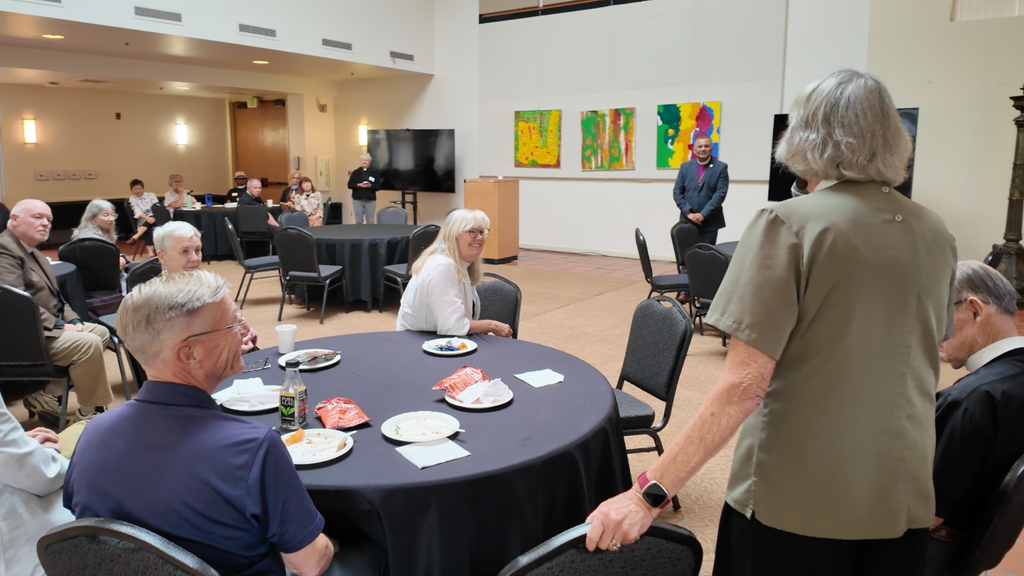
Dr. Karl Sandin, a physical medicine and rehabilitation specialist and public health practitioner in Santa Barbara who is discerning a call to the diaconate, said he is interested in structural justice work among health care system employees who “find themselves really needing chaplaincy services.” Often, he said, health care workers are unwilling to seek out chaplains because they feel they would be taking the service away from a patient.
The Rev. Sun Hwan-Spriggs serves as deacon at St. Paul’s, Tustin, as a spiritual director and facilitator of contemplative practices, and of Sacred Ground, the faith-based anti-racism program of The Episcopal Church. She has also been involved in Sacred Resistance, accompanying asylum seekers and visiting those in detention centers.
The Rev. Dominique Piper said she became a deacon after witnessing deacons in action. “Service is in my DNA,” she said. “My mom was a single parent, and when no one else was around, the church was.” Piper is a union advocate for the National Air Traffic Controllers Association and serves at Church of the Blessed Sacrament in Placentia. “Church can be a place of respite and healing if we do it correctly,” she said.
Postulant Phylene Wiggins said becoming a deacon “will be my third career. My first was in human resource management, where I did a lot of outreach programs to underserved communities, creating hiring programs to help lift people and give them dignity.” She has also been a community organizer, creating initiatives around aging and caregiving. “I have a vision for people on the edges. And I have done that my whole life. I work (now) in a botanic garden … bringing in resources for sustainability and climate issues. I’m happy to be stepping into my calling in a way that demonstrates the values I already had, but puts them externally, and that I’m able to speak in a faith-based way.”
Retired Archdeacon Joanne Leslie currently is involved in Sacred Resistance and immigration justice work, she said. After serving at various diocesan congregations, she now attends St. Augustine’s by-the-Sea in Santa Monica. The most important thing a deacon does on Sunday mornings is to say to people, “You’ve now been fed. Go out into the world and take this to the larger world,” Leslie told the gathering. “That’s how I see the heart of a deacon’s ministry.”
Gallardo extended an invitation for deacons to accompany him, figuratively and realistically. “I hope we can increase the level of understanding and awareness because there are no hierarchies in the church. We are all the same in Christ. We have tensions we have to go through. We have realities we need to tackle. But I believe that in God and with God, everything is possible and that God is calling us at this moment in time to figure out what that role is. And we’re going to be doing it together.”
If you are interested in knowing more about the diaconate, please contact the archdeacon at lsiriani@ladiocese.org.